Monday, 4 February 2013

Some films I'd recommend to Diana

My friend Diana told me that it would be a dream come true if I dedicated a blog post to her. Being an insanely busy person with a hectic schedule the prospect of this happening was nil, but I’m one of those people who finds it difficult to say no. And if this small good deed is going to make my friend’s dream come true and change her life then I will find the time to do this.

She sent me a list of films that she likes and asked me for recommendations. Instead of replying to her on Facebook message which is probably what I should do, I will reply here on my blog and make it a public matter: 

She said she likes Tarantino films, especially Inglorious Basterds, and as much as I'd like to be able to wholeheartedly recommend to her the latest Tarantino film Django Unchained, I was slightly disappointed by it. Go see it, by all means, because you probably will one day anyway. But what I will recommend are In Bruges and Seven Psychopaths, by Martin McDonagh. His style reminds me of Tarantino; and obvious similarity is the use of excess violence, but its use is also satirical – more clearly than Tarantino’s, and you can see that at the same time he clearly has something to say about what he is presenting on screen.

She said she likes The Tree of Life. I actually didn’t like it that much. I briefly wrote about it a long time ago on this blog so scroll all the way down to check it out! There was nothing wrong with the film but I just…. well... I’m not as intelligent as you. A film that I saw recently which was also a visual spectacle was Life of Pi. Also pretty impressive visually, not on such a grand scale as The Tree of Life, but what it has to say is easy to understand even for idiots like me.

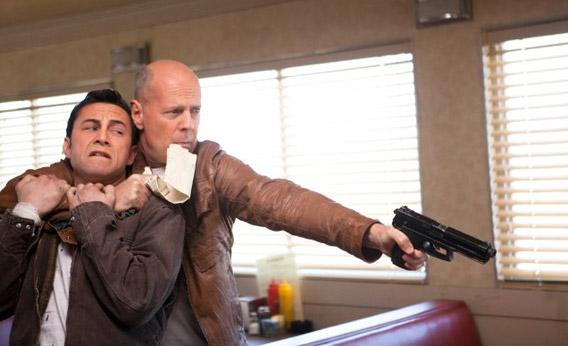
She said she likes Donnie Darko. I can’t remember much about it cause I saw it when I was like 15, but its time travel vibe reminds me of films like The Butterfly Effect, or even The Source Code. Neither are ‘great’ films, but are pretty decent and highly entertaining. Last year there was Looper, also about time travel with a unique plot, which I recommend.

She said she likes the films of Alejandro Gonzalez Inarritu, especially 21 Grams. I also love 21 Grams. The only other film by him that I’ve seen is actually Babel, also with interweaving plot lines. I remember it being so-so. Interweaving plot lines reminds me of one of my favourite films, The Edge of Heaven, a Turkish & German film, extremely compelling, deep and powerful.

She said she likes The Reader, and I actually just today saw the 2002 film The Hours, with the same director (Stephen Daldry) and screenwriter (David Hare). It wasn’t as great as it made out to be; it was delivered well, structured well, the performances were awesome (especially Nicole Kidman who plays Virginia Woolf, and Julianne Moore) and I guess I’d recommend it. It’s about suicide so yeah, really cheery.

She said she likes Revolutionary Road. I liked it too, I love Sam Mendes’ films – American Beauty (which you’ve probably already seen anyway) and Road to Perdition are some of my favourite films. Their themes are of loneliness, the past and the present, and of hope – something Mendes always explores so well.

You mentioned several other dark/confusing films – Requiem for a Dream, Mullholland Drive, actually that’s it, but I got the general vibe that you like somewhat depressing or sinister films, so I will list out a few more of my contemporary favourites:
 
The Talented Mr Ripley
The Devil’s Double
Blue Velvet (David Lynch, I’m sure you’ve seen it)
We Need to Talk About Kevin
Children of Men
Vanilla Sky (the original Spanish film Abre los ojos is better)

And my favourite film of last year which I’m recommending for the sake of it: Holy Motors

And one of my fav films, not really sinister, just purely depressing (beautiful though): Never Let Me Go

And I hear The Master is really good, I haven’t seen it yet but I think both you and I will like it! I’ll let you know when I eventually see it if I’d recommend it to you.

Thursday, 31 January 2013

12 Memorable Movie Moments of 2012

Some of the most memorable moments last year, from terrifying shots to visually splendid sequences.
I couldn't come up with 2012 so I came up with 12 instead.


In order of the modern English alphabet:

Amour

I loved the use of the pigeon in this film. Whether or not it was a symbol of death, or entrapment, whatever the meaning, it was a nice addition. On first viewing I was just hoping he wasn’t going to smother it. On second viewing I was able to find it a touching moment as he tries so hard to capture it, finally manages to, and after a moment of contemplation appears to hug it. That was heartbreaking.


Argo

There were lots of thrilling moments in Argo but one which was particularly effective while being a bit sinister was the shot(s) of the children hired by the Iranian government putting together the shredded photographs of the hostages. I don’t know if this really happened and if it did I have no idea why children were used to do this, but whether or not it was a piece of fiction added on to evoke suspense, it worked really well.


Beasts of the Southern Wild

I liked the brutally honest cinematography of this film in general but the most memorable element for me was the depiction of strength and wilderness in the form of the horned boar-like beasts. I loved the reoccurring shots of them running, expressing power and life, and towards the end when they come face to face with Hushpuppy I loved their eyes which conveyed a sense of a pureness and innocence within the wild.


The Deep Blue Sea

The underground sequence where Hester remembers the people huddled up to shelter from the bombing during the war was incredibly beautiful. As they sung in unison to keep their spirits alive I felt a strong sense of human connection, hope and a united nation. The fact that this is a memory, the camera panning across the platform of the station, makes it quite haunting (it reminded me a tiny bit of the scene at Dunkirk in ‘Atonement’ by Joe Wright) and it remained in my head long after the film ended.


Django Unchained

The dinner scene at Candie’s place was great, though slightly too long, and I thought that anecdote about the skull felt like an accessory more than a necessity. Leonardo DiCaprio was fantastic though. Before watching the film I saw an interview where Leo explained that when he smashed the glass on the table it actually cut his hand and started to bleed but he continued with the scene and that was the take that was used in the film. So I was watching his hand carefully during that scene and there was much more blood than I expected which gave his character and the scene a more menacing effect - kudos for continuing with the scene! Samuel L Jackson is also brilliant here; his character is probably the most fascinating thing about the film.


Holy Motors

The film was built from numerous spectacular-looking, often bizarre sequences. To name a few, there was the shocking (and hilarious) flower-eating sequence in the cemetery, and then underground with Eva Mendes with his… erm… yeah. The motion capture scene was equally memorable. In fact pretty much every sequence was memorable so I can’t highlight one that particularly stood out, so I’ll just choose the scene towards the end with the monkeys. For a split second this monkey scene ruined the entire experience for me by taking it to a ridiculous level, but I quickly became accepting. It didn’t do anything for the narrative (if there is such thing in this film) and had it not been included it would probably have made no difference, but I liked how far it stretched out to be bizarre and say something about cinema.


The Imposter

At the end of the film when Bourdin is seen dancing to a Michael Jackson song in prison, it’s pretty chilling and somewhat humorous at the same time. Bourdin clearly had a fascination for the American life (evident from when he talks about the ‘yellow school bus’ and his experiences of going to high school for the first time), so I interpreted the dance as representative of that fascination for America he may have had for many years, since he was a child perhaps (judging from the elaborate choreography). And of course there is the popular interpretation of it being a metaphor for ‘robbed childhood’, relatable to MJ.


Les Miserables

I didn’t really like the film itself for its lack of variety in shots and ungrand scale despite all the money spent (basically it felt like a musical stage on screen), but the point of redemption for me was the final scene where the ghost of Fantine appears and takes Valjean away with her. I’ve always appreciated how this sequence was pulled off on the musical stage but in this film there were literally two Valjeans, one who had just taken his last breath in the chair and the other, liberated and striding off into the afterlife, guided by Fantine. This is something that could only have been done on film, and I appreciated it and it actually moved me. And after this came the very final scene of the film where the entire cast sing ‘Do you hear people sing’, which was equally moving. They finally use a wide shot!

Another scene from Les Miserables which was impressive and memorable – Javert’s suicide. Among all the obsessively used close up shots and feeling of claustrophobia, the height of the fall here made the sequence a liberating experience. It also finally frees us from his god awful singing. The liberation hits a grim note as Javert, plunging to his death, smacks his head against the rocks before being washed away limply by the water.


Life of Pi

The whole middle section of the film was a visual spectacle, with pretty realistic looking animals and the enchanting colours of the water and the heavens at night. As the shipwreck is happening, Pi dives underwater and we watch the ship fall apart and sink together with him. Cut to over an hour of visual splendour later, Pi's adventure at sea ends as he collapses onto the Mexican beach. Richard Parker jumps out of the boat and strides off into the jungle without looking back to say goodbye and this brings Pi to tears – even present day Pi as he tells his story. It brought me to tears too.


Looper

The scene where older Seth’s body parts fall off/disappear is truly unique and horrifying. The way this is presented to us, first with the emerging of the carved words in his arms, and then how one by one pieces of him just fall off or shrivel into themselves is something I’ve never come across before. He cannot see what’s going on but he obviously realises what is happening to his past self – the thought of this itself is terrifying - wow!


Skyfall

The opening credits of this film is so brilliant, it gave me goosebumps. Bond’s fall into the water links into the credits nicely, and the title song by Adele is so perfectly Bond-like and classy, as is the credit sequence itself. And it’s just so interesting to start the credits right after Bond has been 'killed'. Of course we all know there’s no way that he's actually dead, but precisely because we know this I think the credits draws out a sense of immortality and it begins to develop the major theme of this film of Bond becoming too old (both him and the franchise itself).

Another memorable scene is when Silva, confronted by M, takes out his fake jaw and shows us his disfiguration, which is so terrifying and creepy. It sums up his menace and gives depth to the backstory of when he used to be an MI6 agent himself and his relationship with M.


Zero Dark Thirty

The final half hour of this film pays off for the frustrating 2 hours before that, and knowing the weight of the subject matter it was a tense experience. The best part, though, was the final shot of the film. From the prior sequence where the soldiers return and bring the supposed corpse of Bin Laden, Maya does not show any hoorah or sense of accomplishment at all. Then she is shown on the plane alone, a close up on her vague and questionable expression. She’s just dedicated 10 years of her life to this mission. What was the significance of it all? What now?


Note: I still haven’t seen ‘The Master’.

Tuesday, 29 January 2013

Top 15 films of 2012

15) Untouchable dir. Olivier Nakache & Eric Toledano

I completely understand why this wasn’t nominated for an Oscar and I wish the French had put forward ‘Holy Motors’ (which I really liked) instead of this film but oh well. I hear Hollywood might remake it, which doesn’t surprise me (though I wish they wouldn’t) because it so ‘feels like a Hollywood film’ – when I think of French contemporary cinema (I haven’t seen much at all so I may not know what I’m talking about) I think of quirkiness - as though they were trying to do the New Wave again - intimately but never over dramatically. This film is corny, it’s sentimental, at first glance it’s like a Hollywood film. Yet, it feels so French. Like some notable moments, for example when Driss humorously shaves Philippe’s moustache & beard. Jokes are so brutally honest, and the piano-based score by Ludovico Einaudi not only accompanies the story but entwines with it and pulls out raw feelings, but never goes over-the-top. I was expecting corny typical Hollywood-imitating drama but I got something slightly more exquisite.

14) The Deep Blue Sea dir. Terence Davies

SPOILER ALERT!!!

It was such a long time ago that I saw this film but I still remember how ‘British’ and poetic I felt everything to be, poetry not from what the characters said but more so from what they never said, from the way they looked at each other (especially Rachel Weisz, who was brilliant) and from the pauses between dialogue. I loved the parallel between Hether’s self destructiveness and the scenes of destruction from the war. And at the end when she loses everything she could easily have crumbled to pieces again, yet she draws open the curtains in such a liberating manner and the camera pans to a destroyed house in comparison. The underground scene when she remembers the people gathered there to escape the bombing singing together was magical and I still remember it vividly.

13) Django Unchained dir. Quentin Tarantino

SPOILER ALERT!!!

I enjoyed this film, it was entertaining and the performances by the supporting cast (Christoph Waltz, Leonardo DiCaprio & Samuel L Jackson) were absolutely terrific. Christoph Waltz was the ‘good guy’ (which worked out well as we are comforted by the knowledge that this gun-loving dangerous man is on our side) and he supported Jamie Foxx so well. Jamie Foxx by the way did a good job too, but his character Django doesn’t actually give much input (until the final act) which I think is supposed to be the case because he’s like a vessel, he’s the subject and the story is what happens to him (does that make sense?) Leonardo DiCaprio was the best thing about the film, playing the outrageously evil Calvin Candie with just the right amount of drama. He didn’t get nominated though, surprise surprise. And Samuel L Jackson’s character was so sinister and was probably in fact the truest form of evil in the film. He is able to sense immediately that there is something going on between Django and his wife and where we (at least I) thought he might let them off or even assist them, he ‘betrays’ his own people/race and chooses to be loyal to Candie. I wish they had developed his character more and shown more of him. In fact not just him but Leo as well, and perhaps Waltz. That was my problem with the film. Instead of going on and on extending scenes I felt they really didn’t need to, I wish they’d shown more of the characters. And the final act was disappointing. It’s Tarantino so there’s supposed to be mindless violence, but it was a little too all over the place for me after Leo and Waltz died. All hell broke loose. I think the satirical approach was supposed to emphasise the true horrors of slavery and the violence involved, but it wasn’t successful. If I am to take the film as pure entertainment and nothing more, it’s still disappointing compared to his previous film ‘Inglorious Basterds’ for example, which was so epic and just absolute fun. Compared to his previous films, this story was too simple.

12) The Grey dir. Joe Carnahan

SPOILER ALERT!!!

I didn’t see this until recently because of the utterly misleading trailer. And Liam Neeson. It looks like just another survival film except this time there’s wolves as well – awesome! So of course the people who went to see it expecting that were disappointed. It’s not supposed to be taken literally at all. The characters are supposed to die one by one at each obstacle, Liam Neeson is supposed to be the only one alive at the end, the howling and growling of the wolves are supposed to sound over-the-top, it’s supposed to be unrealistic. Yet not have the plot lose its validity. Because it’s all a metaphor for life and death. Fear of death. Fear of living. The twist at the end was revealed so perfectly at the perfect time which turned everything on its head. The film was a wonderful little surprise and I wish they’d marketed it for the correct audience.

11) Looper dir. Rian Johnson

SPOILER ALERT!!!

I don’t usually enjoy science fiction/action but I was taken by surprise because of the originality of this film’s idea. Though, the concept of needing to send people back in time to kill them, no matter how strict or whatever the government has become in the future, is ridiculous. In fact there’s tons of plot holes and absurdities, but you know what, none of it matters! As Bruce Willis actually said at some point in the film, “I don’t want talk about time travel because if we start talking about it then we’re going to be here all day.” Which I thought was a way of Rian Johnson telling us that he’s aware it doesn’t make total sense but let’s just sit back and enjoy. And that is so easy to do here because of this whole enthralling world and idea that he has brought to life. The film has been structured well I think, I loved the pacing. Whether or not everything was accurate, young Joe (Joseph Gordon-Levitt)’s actions changing Bruce Willis’ memories, that whole idea of having your present self and older self existing in the same time frame facing each other is so wonderfully absurd. The Cid storyline was very entertaining. The idea of needing to stop/kill a little boy into becoming a future evil force, his emotionally being affected by his parent/step-parent and the love that he is given, his rage and his supernatural powers, all borderlining sentimentality, for some reason reminds me of Japanese manga/anime and it’s refreshing to see it here in this context, making it an all the more unique experience. And the effort put into physically changing Joseph Gordon-Levitt’s face without using CGI to look more like Bruce Willis’ has truly satisfying effects for viewers. A brilliant scene that still remains vividly in my mind is the one where older Seth’s body parts begin to disappear one by one, starting with his fingers and then his nose. That was truly horrifying!

10) The Impossible dir. Juan Antonio Bayona

This is based on the true story about one family’s experience of the 2004 Indian Ocean Tsunami. Before watching the film I wasn’t so sure if it was appropriate seeing as it was such a terrible event, which also for me as a half Japanese person is reminiscent of the 2011 tsunami/earthquake which hit Japan, but I decided to see it and I’m glad I did. Like the title suggests, the family are torn apart but miraculously all survive and find each other. It’s amazing because it’s a true story and therefore I think it was necessary in fact, for people to see it as a symbol of hope. That such an extraordinary thing can actually happen. And towards the end as the family make their way onto their private plane provided by their travel insurance, as they walk past the masses of people in despair, grieving and in agony, it reminds us, in case anybody had got carried away, that this is in no way a happy ending. I’ve seen some people complain about the sappy use of the camera, the sentimentality in how for example the sound is muted when Naomi Watts is thrashed under water etc, but I don’t know how to respond to that… I suppose I agree. When Tom Holland, his younger brothers and Ewan McGreggor find each other outside the hospital, that is another example of extremely cheesy filming and use of music. But the truth is that they did find each other, the miracle did in fact happen, so why not be dramatic with the use of camera was the mentality behind the director I suppose..? But at the end of the film I do not feel like any of them had been glorified in any way or presented like heroes. So I suppose it’s okay. Naomi Watts was wonderful, as was Tom Holland who played the eldest son.

9) Beasts of the Southern Wild dir. Benh Zeitlin

Once again I didn’t see this film until recently because I thought it was going to be just a child point of view fantasy film. Yes it was that, but I had no idea how rich and mystical the fantasy was going to be. It’s ultimately about Hushpuppy ‘growing up’ but the beauty of this film is in how it’s structured and told visually from her perspective and the layers of the characters and what everything in the film represents. Everybody will take something different from it and have completely different experiences. The performances are incredible, especially Quvenzhane Wallis (though nominating her for an Oscar is a bit too much I think).

8) Skyfall dir. Sam Mendes

SPOILER ALERT!!!

Sam Mendes did a truly amazing job here and it was fitting as the 50th anniversary Bond. Thematically, the suggestion that Bond was becoming too old was of course representative of the franchise itself as well. The opening chase/fighting sequence was awesome and gripping and the transition from his falling into the water into the opening credits with the brilliant ‘Skyfall’ sung by Adele gave me goosebumps. Javier Bardem was introduced in that memorable continuous shot and in that scene facing M the acting was top-notch. So wonderfully chilling and creepy! Ben Whishaw was an interesting addition as Q, though to be honest his hacking scenes were a bit ridiculous. But I loved his introductory scene with Daniel Craig. At the end after reaching Skyfall the disappointment started. I read that the role played by Albert Finney was actually originally written for Sean Connery, and that seemed ridiculous at first but now that I think about it, it would’ve been so awesome! Imagine the reactions of the audience! It would have made no sense in that he is Bond so it isn’t possible, but it would’ve instantly translated to us as the ‘father figure’ - Bond going back to his roots. Instead we get Albert Finney appearing suddenly out of nowhere and sticking around for the rest of the film, still there even in the final scene when M dies. The whole M mother figure dying in his arms was nice, and I really liked the moment when Javier Bardem sees the tombstones of Craig’s parents. It’s sentimental but not too sentimental. Overall a great story with fitting themes and little things like the Aston Martin, the final scene which ties nicely to the very first Bond film, the brilliant cinematography, the all-star cast and soundtrack which nicely complements the film, make Skyfall not just a great Bond film but a great film on its own. If a Bond film was ever going to be nominated for Best Picture this had to be it, but it wasn’t. I guess it will never happen then :( 

7) The Imposter dir. Bart Layton

SPOILER ALERT!!!

What a bizarre and incredible story! This is a brilliant example of the unreliable narrative as it’s told from the perspective of this pathological liar. It’s a documentary but it really perfectly combines documentary style and film style, for example overlapping his mouthing of words with his recollections (reconstructed footage) which has such a sinister effect. Later in the film there is the whole suggestion of the family murdering their son and things had been shot in a way to make that seem believable. Which brings me to the point that if they were in fact innocent I feel slightly bad for them. But I suppose it’s been made clear that this is merely his account of what happened and thus we probably should doubt him seeing as he’s a natural ‘imposter’. I wish they hadn’t ended the film like that though, so ambiguously. It leaves this eerie and disturbing feeling which is probably good, but it’s so unsatisfying.

6) Moonrise Kingdom dir. Wes Anderson

This was such a sweet and adorable film about innocence and also I think hope, told straightforwardly but enchantingly. I loved the strong sense of place and the colours & general cinematography of the film. The supporting cast was an ensemble of some great actors – Edward Norton, Bruce Willis, Bill Murray etc, but the 2 leads Jared Gilman and Kara Heywood weren’t overshadowed at all, in fact they really shone. Wes Anderson made use of their inexperienced (they were both first time actors) innocence and freshness to his advantage, combined it with magical Wes Anderson-ness and came up with this wonderful film which felt play-like.

5) Argo dir. Ben Affleck

This had me on the edge of my seat pretty much the whole time. I loved the script (by Chris Terrio), loved the suspense, loved how fluid it felt and loved the paralleling between scenes of the hostages and the whole science fiction film element. This was based on a true story but it was clear some things were altered, added or removed in order to make the film a more dramatic experience, which is something that I've grown to not mind (depending on the subject matter). In this case it only annoyed me towards the end at the runway of the airport because what was being shown was just impossible and ridiculous, but overall Argo was an extremely engaging and tense, enjoyable experience and I was hooked from the introductory sequence combining comic book strips and documentary footage.

4) Seven Psychopaths dir. Martin McDonagh

This was thoroughly entertaining and also very unique. It’s about a screenwriter struggling with writer’s block trying to write a screenplay called ‘Seven Psychopaths’ based on the 'psychopathic' people around him and the things that consequently happen. There’s a lot of Tarantino-esque violence but as the protagonist Colin Farrell seems to feel, I think it strives ultimately to say something about such violence, raise questions, even suggest that it's stupid, and I think it succeeds humorously while being a violent and entertaining film. Which I've explained badly but I'm hoping you'll understand if you see the film. The characters were brilliant, notably the supporting actors Sam Rockwell and Christopher Walken, and once again as with Martin McDonagh’s previous film 'In Bruges', I love the dialogue!

3) Life of Pi dir. Ang Lee

SPOILER ALERT!!!

I really wish I’d seen this in 3D. I’ve never seen a film in 3D so I can’t say for sure but the film really made me think that if it’s for a film like this, if 3D is going to be used ‘correctly’, then it will no doubt be spectacular. I never thought I’d like a film with such heavy use of CGI so much. It really surprised me and that’s why it’s climbed this high up the list. By the time Pi and the tiger were alone in the little boat there was still half the film left to go so I wondered what was going to happen. How is Ang Lee going to stretch this section out for so long to depict the sense of endlessness and starvation without boring us? But one after another came visual spectacles which just wowed and stunned me. The beginning part of the film was nothing exciting but after finishing the film I accepted it, not in the sense that I was 'forgiving' it because the rest of the film turned out to be great, but because those themes of self-searching, growing up and seeking a 'God' needed to be presented to us first for us to make sense of it all in the end. The ending initially disappointed me because I just couldn’t believe they’d told this entire magical story to us and then in a matter of seconds said that in fact none of it actually happened, but then I soon understand that was the point. The story isn’t a survival film or a fantasy film but is a metaphor for faith; what we experience and what we feel depends on whether or not we have faith and where it lies in. Suraj Sharma did an amazing job in his debut feature film.

2) Silver Linings Playbook dir. David O. Russell

SPOILER ALERT!!!

This film is so brilliantly done. Ultimately in terms of genre and plot structure I suppose it's pretty conventional and predictable, but if this makes any sense, at the same time it feels so unconventional and unpredictable as it is executed so well in every aspect. It’s not just a love story but it’s also about family, notably father and son. They even had to cast Jackie Weaver as the mother even though I’m sure anybody could’ve played her, but just to make everything perfect they did – the film’s been nominated for all 4 Academy Award acting categories. The American football element was nice, the dance element was surprising but wonderful, and the dance itself is a bipolar dance with ‘ups’ and ‘downs’. I don’t know anyone with bipolar but I’m very familiar with mental health issues and I thought Bradley Cooper and J-Law both played their characters believably and sympathetically. This theme was what attracted me to the film in the first place. I loved the ending - the characters really deserved it. I don’t think it’s just corny and irrationally concluding things to make it a ‘feel good ending’ – the brief scenes of Cooper and J-Law being happily together at the end having found each other also conveyed a strong sense that the road ahead will continue to be bumpy.

1) Holy Motors dir. Leos Carax

For the first half of the film it was more like Holy Shit because I wasn’t comprehending anything. And there isn’t any specific moment in the film where things are made clear, we all make our own interpretations, and the interpretation I made was that this film was about how humans ‘act’ their lives as though they were on camera, and nowadays cameras are literally scattered around everywhere and we subconsciously play characters as opposed to actually live. That seems like quite a bland and simplified explanation, but when I was watching it I’m sure I had a more interesting eureka moment of understanding. Of course it's also a tribute to cinema itself I think, stretching out as far as possible to show us what film can do. Holy Motors was certainly the most mesmerising, mind blogging and satisfying film of the year for me!


Note: I haven't seen Paul Thomas Anderson's 'The Master' which looks like the kind of film I'd like. I think it may have been on this list had I seen it.

Monday, 26 November 2012

Film noir & neo noir – conveying a sense of the past


Defining film noir, a genre of film stretching from the 1940s to the late 1950s, has been a difficult challenge for many critics, so much so that cinema historian Mark Bould regards it as an “elusive phenomenon…always just out of reach[1]”. It was brought to Hollywood by Europeans after WWII, with ideas, feelings and of course filming techniques different to those of Hollywood so far. Intertwined with the hard-boiled crime fiction stories and attitudes born in the US during the Depression already evident in 20s and 30s gangster films and within the setting of war time disillusionment in America, often film noir is about or refers to the war. If not literally war related, there is almost always a dominant sense of nostalgia, looking back to earlier, more innocent and simple pre-war times. Several techniques and devices have been used by film-makers to convey such senses of the past.

One of the major influences on film noir is German Expressionist cinematography. Its detailed, anti-naturalistic mise-en-scene and symbolism which create a dark, sinister mood was brought to America by emigrating German film-makers during the war when the Nazis gained power. The plots of Expressionist films also matched this dark and disillusioned visual style, often dealing with madness, insanity and paranoia. Noir is all about darkness and hopelessness; the protagonist looks back to a time in the past when times (or he himself) used to be more innocent, mirroring the American crisis. An example of sheer doom can be seen in They Live by Night (1948); Bowie longs for a simple life and wants to be good, goodness being what Bowie’s love interest represents, but their destiny is clear to the audience from the beginning and as expected, he is killed. A good example of visual Expressionist influence is in The Third Man (1949) which is arguably British noir[2], with its dramatic angles and shadows particularly evident in the chase sequence in the sewer at the end. The eerie house in Hitchcock’s Psycho (1960) is also a fine example of expressionism, though this film is regarded as neo noir rather than classic film noir, if noir at all (Hitchcock is not prominently associated with noir). Not only is the feeling eerie, but the fact that we never get a clear view of within the house, and certain shots such as the bird’s eye shot of the ‘old lady’ rushing out of the room to kill the detective, and the same when Norman carries his mother down the staircase, are techniques used to achieve this uncanny feeling.

Robert Ebert states that “the very essence of noir is that there are no more heroes.[3]” The gangsters of noir look back to an earlier life when they used to be ‘good’, but ultimately their innocence is lost, just like the American post-war soldiers. Out of the Past (1947) begins with Jeff the protagonist in a small simple town, having already tried to escape his dark past. The truth catches up with him and he returns to the city to clear up the mess he made, but he comes back, still with hope of escaping; what follows is doom. Another example of nostalgic longing in noir is On Dangerous Ground (1952). Troubled cop Jim is sent to the snowy countryside to solve a murder case, and there he meets love. After the case is solved he returns to the city, but in order to be with Mary and achieve happiness he comes back to the countryside (the snow and the countryside represent simplicity and purity). Though there is no doom here, Mary, who is completely innocent, is blind. We feel sorry for her, and it might be that handicap stresses virtue and goodness (there is also a deaf boy in Out of the Past).
Another example of handicap playing a key role is in The Spiral Staircase (1945) by Robert Siodmak who is a German noir director of Polish origin. The old silent film at the beginning is a great reference to the past and establishes right away that Helen loves the past and is somehow stuck in it. It turns out that she is a mute and thus is unable to escape and live in the present. The Doctor then drives her home from the cinema in a horse and cart even though there were cars at this time of course. This use of prop locks her further in the past. The staircase itself is also of course a key to the past, since many things happened on it which caused the present impasse. The past is not necessarily purely lovely, but is also filled with dark secrets. This traumatises Helen and turns her into a mute.

Flashback is a key technique used in many noir films in order to go back to the past. Out of the Past, already mentioned, consists of flashbacks. Dead Reckoning (1947) is another film, told half in flashback by Captain Rip Murdock as he looks for his friend who has just returned from the war. Rip doesn’t understand anything as his friend was a good guy, but as he furthers his investigation he uncovers his friend’s secret-filled past. The Anti-Semite noir film, Crossfire (1947) is also composed of flashbacks to the war. There is plentiful use of shadows and harsh lighting demonstrating the effect of Expressionist influence, though Dmytryk himself stated that it was simply cheaper and “a lot faster to light the people and then throw a couple of big shadows on the wall.[4]” Recognised as one of the first Hollywood films to deal with racial bigotry, Crossfire doesn’t just mirror the social problem in America but highlights it and by turning it into a message, calls for, or attempts to call for change. Shot entirely at night, it is as though the soldiers are only able to survive in darkness; in the shabby apartment, the theatre, in nightclubs etc. These gloomy settings which emphasise loneliness are typical characteristics of film noir; they “construct a frightening alternative, a life of permanent impermanence, to the settled, middle-class existence that was ordinarily purveyed by a Hollywood formerly preoccupied, for sound business reasons, with picturing ‘sunlit pastures[5]’”, in other words portraying the true American mood dominated by “dread and terror.[6]

The dialogue in Crossfire consists of soldiers’ slang, and this is an obvious link to their immediate past. Another example of language linking to the past is in The Enforcer (1951). Gangster terminology such as “a hit”, “a hitman” and “a contract” were not familiar terms back in the 50s to either the characters or the audience, so the protagonist, D.A Martin’s confusion as to what these terms mean highlights a sense of nostalgia, looking back to simpler, more innocent times before the war. There is also empathy created, not just in The Enforcer but in any film where simple and honest people are killed by gangsters, which also mirrors the pointlessness of the war which had killed so many million people and raised a sense of “the possibility of sudden, undeserved death[7]” among the people.

Some unique devices not mentioned yet used either to escape into or escape from the past are, for example, in The Dark Passage (1947) where a literal escape from the past has been attempted through plastic surgery. Vincent, the protagonist who escapes from prison in order to prove his innocence undergoes illicit surgery as his face is too well known in order for him to get anywhere. Until after his surgery the entire film has been shot from Vincent’s eye view. The same method of filming has been used in Lady in the Lake (1947) throughout the entire film. Hitchcock’s Psycho (1960) uses the dummy technique as a bizarre way into the past. Perhaps due to the increasing popularity of psychotherapy at the time, Freudian ideas and concepts recur in several of Hitchcock’s films, for example in Spellbound (1945). Psychoanalysis is used to open the locked doors within the patient, Peck’s mind and reveal truths and forgotten events from his past. Similarly to the case of Helen in The Spiral Staircase (1945), the past has both tangled up and (later) freed the mind. Usually in noir it is a detective who investigates and digs up the past.

Though it is more ‘new wave’ than film noir, Hiroshima Mon Amour (1959) certainly has strong aspects of noir. It is a clash between the past and the present, the power of the past and memory. The documentary style conjures up the past of the war and is haunting; the music and slow pace add to this. Resnais was influenced by Casablanca (1942) (we see a café by that name in the film) and Vertigo (1958), and Casablanca itself is dominated by memory, though not usually called film noir. Resnais uses all kinds of devices, such as sudden switches from one person now to another in the past, a hand to another in the past (of the German soldier Elle was in love with) and so on. One could say that film noir comes not just from German directors but also the French, for example Tourneur and Max Ophuls, who was German but also worked in France. It can be suggested that obsession with the past was a European thing which travelled with European directors (such as Siodmak) to America and in a way travelled back with some of them and also influenced other up and coming French and German directors (e.g. Wim Wenders – Wings of Desire (1987)). Vertigo, like Hiroshima Mon Amour, also has the feature of repetition (though its being film noir is debatable) and is preoccupied with the past; an action recalls a place and a painting recalls a time long ago, the protagonist, Scottie, has to go back to the place and repeat the action – this is ultimate noir.

Eyes Wide Shut (1999) has been described as a neo-noir film, with traits such as slow speed, a haunting quality and a sense of mysteriousness perhaps connected with the past. As it is based on Schnitzler’s Dream Story it looks backs to 1900 Vienna, though it is set in modern-day New York. The past has been evoked firstly through music by composers such as Mozart and Liszt (also the Romanian Orthodox Liturgy), and secondly through costume; the masks worn in the ritual scene reminds us of 18th century Venice, whose carnivals are famous and shown in paintings. The Good German (2006) is also a clear neo-noir film. It is in black and white, and the music is reminiscent of the 40s and 50s. The past is recreated by bits of old newsreels (like in Hiroshima Mon Amour), by the ruins of the city, the costumes and the cars, and by old newspapers. The unusual camera angles and profiles are similar to those of film noir and German Expressionism. Lost innocence is a major theme (the final scene is strongly reminiscent of Casablanca), and there is the debate of good and bad, already evident in the title, The Good German. This again links to Hiroshima Mon Amour, where Elle’s past lover was a German soldier and she falls in love with and confides in Lui, the Japanese man. Jason W. Ellis states that the “atomic bomb that levelled Hiroshima also blasted openings into a netherworld of consciousness where victory and defeat, enemy and self, threatened to merge[8]”, the ‘netherworld of consciousness’ in which the “distinction between traditional values disappeared is also an apt description of the moral atmosphere of film noir.”

To conclude, film noir and neo noir convey a strong sense of the past; usually doom which mirrors how things really were in America after the war along with a nostalgic longing for a simpler past and/or more innocent self. Expressionist techniques such as combinations of extremely high and long angle shots, vivid lighting, shadows, distorted perspectives and detailed set designs and complicated plots help achieve the “sense of limitless darkness[9].” Flashbacks are often used in noir films to connect to the past, and several other devices have been discussed such as dialogue, costume, music, soldiers as characters, empathy created by innocence being killed or handicapped, psychoanalysis, and so on. The protagonists, often “guilt-ridden loners[10]” can never escape from the “lawlessness and moral uncertainty of the dark city” or go back to who they used to be. Thus, they “can inhabit only a present that is always already in the past.” As in Raymond Chandler’s novels, what seemed to be idyllic times were not actually so because dark secrets were hidden which have now to be exposed. Almost all 50s noir films referring to the war, the genre became a space for the soldiers and all others disillusioned and haunted who couldn’t explain their feelings to their families (indeed, domesticity had broken down after the war due to women being increasingly employed in the war effort) to express themselves. While the gangster films of the 20s and 30s reflected the events going on in America, film noir “attacked and interpreted its sociological conditions.[11]


Bibliography
Bould, Mark (2005). Film Noir: From Berlin to Sin City. London and New York: Wallflower
Film Noir Reader 2, essay called British Film Noir, by Tony Williams
http://www.independent.co.uk/arts-entertainment/obituary-edward-dmytryk-1103882.html
The Philosophy of Film Noir, edited by Mark T. Conard, Moral Man in the Dark City, Film Noir, the Postwar Religios Revival, and The Accused R.Barton Palmer
William S. Graebner, The Age of Doubt: American Thought and Culture in the 1940s (New York: Twayne, 1991)
Jason W. Ellis, The End of Victory Culture: Cold War America and the Disillusionment of Generation [Amherst: University of Massachusetts Press, 1995]
Film Noir, Andrew Spicer Noir Style
Film Noir Reader, Paul Shrader, Notes on Film Noir

Filmography
Casablanca (1942) Michael Curtiz
Spellbound (1945) Alfred Hitchcock
The Spiral Staircase (1945) Robert Siodmak
Crossfire (1947) Edward Dmytryk
The Dark Passage (1947) Delmer Daves
Dead Reckoning (1947) John Cromwell
Lady in the Lake (1947) Robert Montgomery
Out of the Past (1947) Jacques Tourneur
The Third Man (1949) Carol Reed
The Enforcer (1951) James Fargo
On Dangerous Ground (1952) Nicholas Ray
Vertigo (1958) Alfred Hitchcock
Hiroshima Mon Amour (1959) Alain Resnais
Psycho (1960) Alfred Hitchcock
Eyes Wide Shut (1999) Stanley Kubrick
The Good German (2006) Steven Soderbergh


[1] Bould, Mark (2005). Film Noir: From Berlin to Sin City. London and New York: Wallflower, p. 13
[2] Film Noir Reader 2, essay called British Film Noir, by Tony Williams, pages 242-3
[4] http://www.independent.co.uk/arts-entertainment/obituary-edward-dmytryk-1103882.html
[5] The Philosophy of Film Noir, edited by Mark T. Conard, Moral Man in the Dark City, Film Noir, the Postwar Religios Revival, and The Accused R.Barton Palmer, p. 189
[6] as above, p. 188
[7] William S. Graebner, The Age of Doubt: American Thought and Culture in the 1940s (New York: Twayne, 1991), 19-20, 19.
[8] Jason W. Ellis, The End of Victory Culture: Cold War America and the Disillusionment of Generation [Amherst: University of Massachusetts Press, 1995], 6
[9] Film Noir, Andrew Spicer Noir Style p. 62
[10] The Philosophy of Film Noir, edited by Mark T. Conard, Moral Man in the Dark City, Film Noir, the Postwar Religios Revival, and The Accused R.Barton Palmer, p. 193
[11] Film Noir Reader, Paul Shrader, Notes on Film Noir, p. 63